
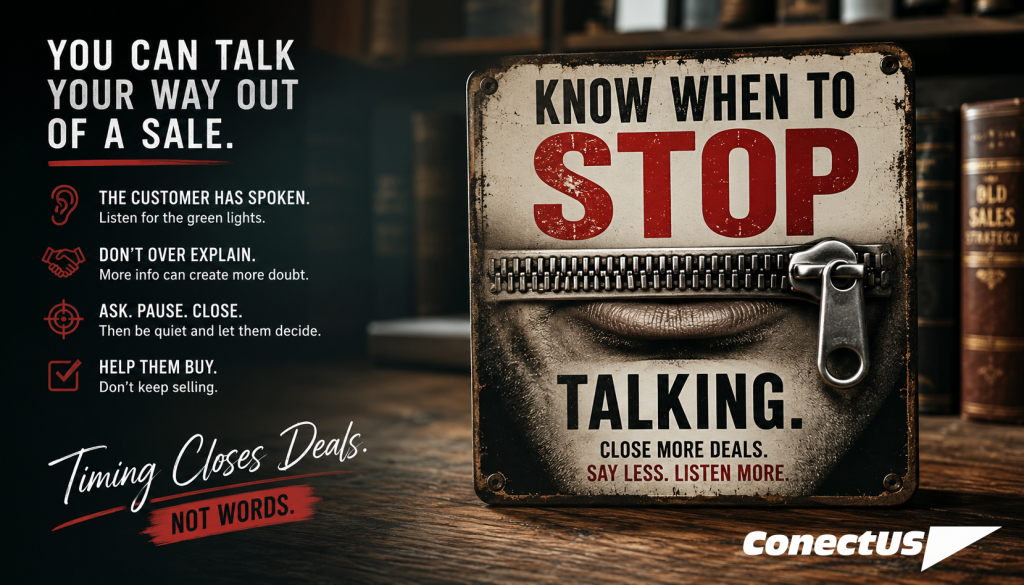
One of the greatest skills a salesperson can develop isn’t knowing what to say—it’s knowing when to stop talking.
Sales professionals spend years learning product knowledge, objection handling, presentations, and negotiation techniques. Those are all valuable skills. However, one of the biggest mistakes made in sales happens in the final moments of a conversation. The customer has already agreed, the concerns have been addressed, and the buying signals are obvious… yet the salesperson keeps talking.
Unfortunately, many sales are lost not because the salesperson failed to make the case, but because they continued making it long after the customer was ready to buy.
There is an old saying in sales: “The first person who talks after the close usually loses.” While that’s not always literally true, there is a lot of wisdom behind it.
When a prospect says, “That sounds good,” “I think this will work,” or “Let’s move forward,” your job shifts immediately. You are no longer selling—you are helping them buy. Every additional feature you introduce, every unnecessary story you tell, or every new objection you accidentally create gives the customer another opportunity to second-guess a decision they had already made.
Think of it like landing an airplane. The hard work is already done. The runway is clear. The last thing you want to do is pull back on the controls and start circling the airport again.
Great salespeople recognize buying signals. They listen carefully, answer the question that was asked, and confidently move toward the close. They don’t feel the need to fill every moment of silence. In fact, they embrace silence because silence often means the customer is thinking, processing, and making a decision.
Many salespeople become uncomfortable with quiet moments and instinctively begin talking again. Ironically, that’s when they start introducing new pricing concerns, technical details, or “one more thing” comments that can derail the entire opportunity.
Confidence doesn’t always sound like talking. Often, confidence sounds like patience.
Once you’ve earned the customer’s trust, answered their questions, and presented a solution that meets their needs, ask for the business. Then stop talking.
Let the customer respond.
The best closers understand that the goal isn’t to deliver the longest presentation or prove they know the most. The goal is to help the customer make a confident decision.
Remember, people don’t buy because you talked the longest. They buy because you listened, solved a problem, earned their trust, and knew exactly when to stop talking.
Sometimes, the most profitable words you’ll ever say are followed by silence.