
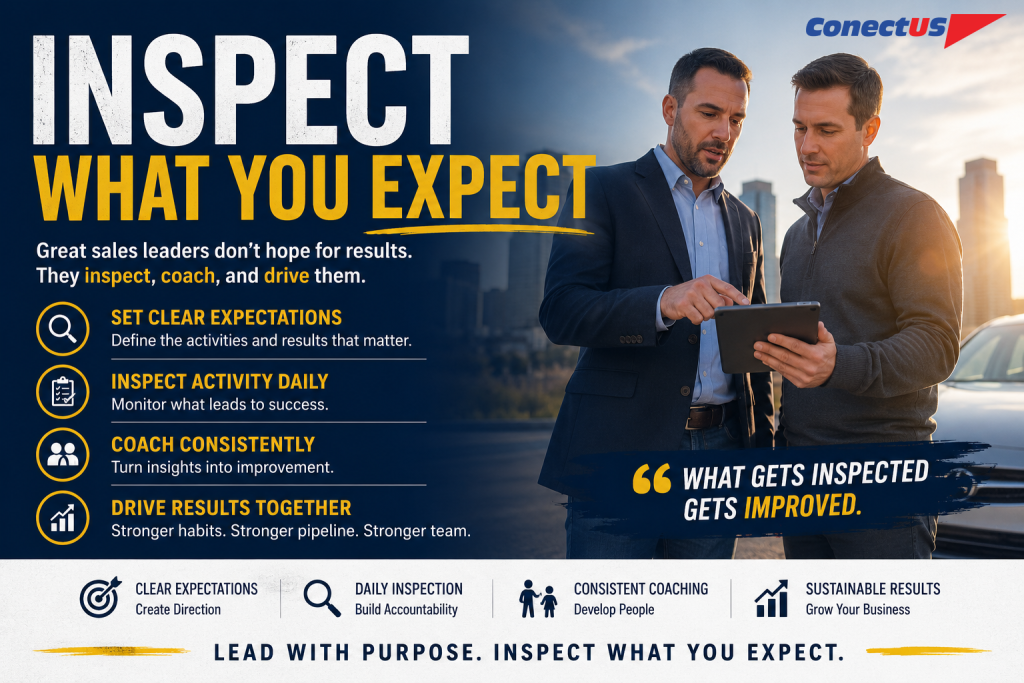
One of the most valuable lessons in business leadership can be summed up in four simple words: Inspect what you expect. Expectations alone do not produce results. Goals, quotas, and sales targets are only effective when leaders consistently monitor progress, provide accountability, and coach their teams toward success.
Many sales managers make the mistake of believing that once expectations have been communicated, their job is complete. In reality, that is where the real work begins.
Successful outside sales teams thrive on consistency. Every salesperson should know exactly what activities are expected each day, whether it’s prospecting, scheduling appointments, conducting customer visits, following up on proposals, or asking for referrals. But simply assigning these tasks isn’t enough. Leaders must regularly inspect the activity, measure the outcomes, and provide constructive feedback.
Inspection is not about micromanagement—it’s about leadership.
The highest-performing sales organizations understand that activity creates opportunity. If a salesperson consistently makes quality customer visits, uncovers business needs, and follows a proven sales process, the results will eventually follow. By inspecting these activities, managers can identify problems before they become missed quotas. Maybe a salesperson isn’t making enough first appointments. Perhaps proposals are being sent but not followed up on. These small issues become much easier to correct when discovered early.
Accountability also creates culture.
When every member of the team knows their performance is being reviewed fairly and consistently, standards naturally rise. Top performers appreciate accountability because it highlights their success, while struggling team members receive the coaching they need before falling too far behind. A culture built on accountability quickly becomes a culture built on achievement.
Technology has made inspection easier than ever. Customer Relationship Management (CRM) platforms, sales dashboards, and reporting tools allow leaders to monitor pipelines, conversion rates, appointment activity, and revenue trends in real time. However, reports alone don’t build successful teams. Great managers use those insights to have meaningful conversations, celebrate wins, remove obstacles, and help each salesperson improve.
The best sales leaders also inspect more than numbers. They ride along on customer visits, listen to sales calls, review presentations, and observe how their team interacts with prospects. Coaching based on firsthand observation is far more effective than coaching based solely on reports.
At the end of the day, people naturally focus on what leadership pays attention to. If managers consistently inspect customer activity, pipeline health, and follow-up discipline, those behaviors become habits. Those habits lead to stronger customer relationships, increased trust, higher closing percentages, and sustainable revenue growth.
Remember, expectations establish direction—but inspection drives execution. If you truly want to build a successful outside sales team, don’t simply expect excellence. Inspect what you expect, coach consistently, and watch your team transform expectations into measurable results.